Get Found First: How to Optimize Your Law Firm’s Google Business Profile for Visibility and AI Trust
In today’s world of AI-driven search and hyper-local competition, having a great law firm website is no longer enough.
If your Google Business Profile (GBP) isn’t fully optimized, you’re not just invisible — you’re actively losing potential clients to firms who took the time to get it right. So, they may not be the best law firm, just the law firm with the best profile.
Even worse, AI tools like ChatGPT, Grok, Bard, and Perplexity are starting to use GBP data as a trust signal — meaning your ranking in both traditional and AI search could suffer if your profile is weak.
So what can your firm do about it?
Let’s walk through the key strategies and actions you can take this week to get your GBP in top shape — and set your firm up to win in both Google and AI search.
(Would you rather watch a video? Check out the video version of this post here)
Why Your Law Firm’s Google Business Profile Is More Important Than Ever
Google Business Profiles are no longer just for local coffee shops or restaurants.
For law firms, your GBP is a core part of your online presence, your reputation, and increasingly, your authority in the eyes of search engines and AI models.
Tools like ChatGPT, for example, don’t blindly trust every website — they look for verifiable signals of business legitimacy and local authority. GBP is one of the strongest ones out there.
AI Regularly Uses GBP to Confirm:
Your law firm actually exists and is active
Your practice areas match what your website says
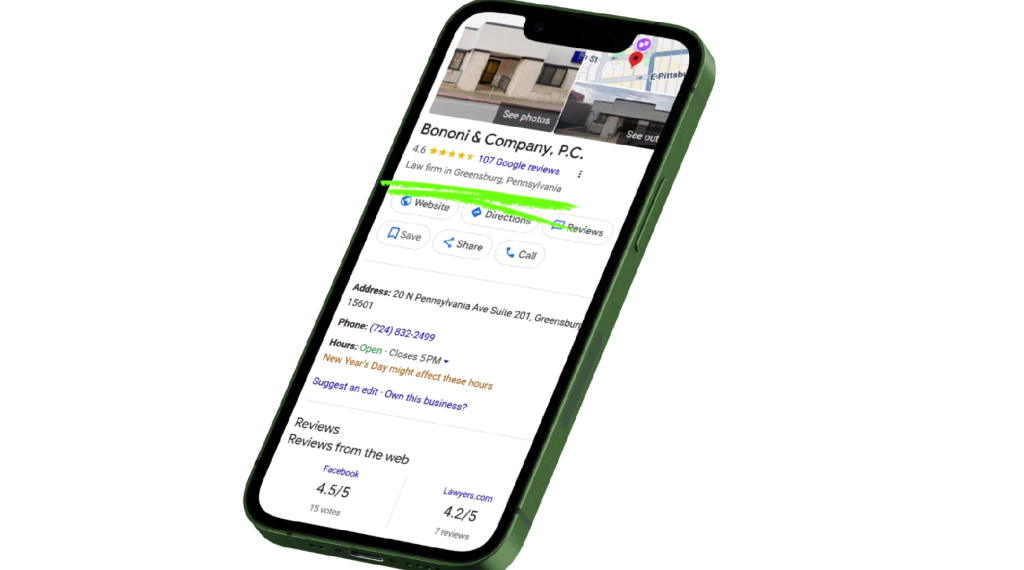
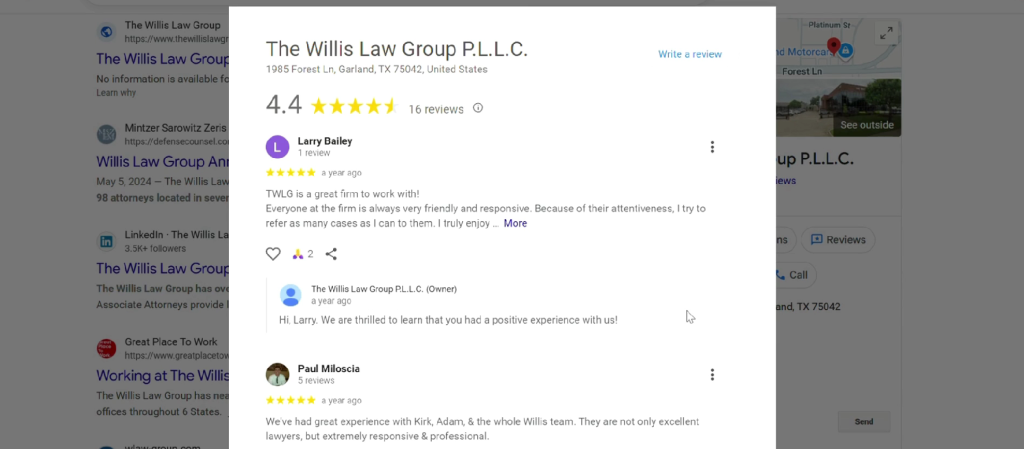
Your firm has a strong reputation via reviews and listing consistency
You’re actively engaged in the community (through updates and interactions)
If your GBP is out of date, empty, or doesn’t match your site’s schema data, your firm is far more likely to be passed over — not because of poor legal skills, but because AI can’t verify you.
How AI and Google Evaluate Your GBP
To understand why this is so important, let’s break down how modern search engines and AI tools analyze your profile:
1. Verification
AI tools cross-check your GBP against your website and major legal directories (like Avvo and Justia) to confirm consistent name, address, phone number, and business hours.
2. Recency Signals
They scan your profile for recent activity — including weekly posts, photo uploads, review responses, and new Q&A updates. A “dead” profile raises red flags and is not likely to be used in an answer from AI.
3. Reputation Checks
Your average review score is only part of the equation. AI also looks for:
Frequency of reviews
Whether reviews mention practice areas
How you respond (or don’t)
4. Schema & Citation Matching
AI tools want to see alignment between your GBP data and your website schema, along with consistent citations across platforms like:
BrightLocal
Yelp
Avvo
Justia
FindLaw
If your GBP and site tell two different stories, you risk disappearing from AI search — even with great content.
Actionable Steps to Optimize Your Law Firm’s GBP
Want to take control of your visibility?
Here’s a checklist of what to do this week — no tech degree required.
1. Complete Every Field in Your Profile
Log into your GBP dashboard and ensure every section is filled out.
Include a client-focused business description — mention your practice areas and service location.
Not sure what to write? You can ask ChatGPT to draft a starting version for you. Just give it the basic information about your firm and let it create your first draft.
2. Choose the Right Categories
Your primary category should reflect your core focus, e.g., “Personal Injury Attorney,” “Family Law Attorney,” or “Estate Planning Lawyer.”
Add secondary categories that match your services.
Pro tip: Spy on your top competitors — see what categories they’re using.
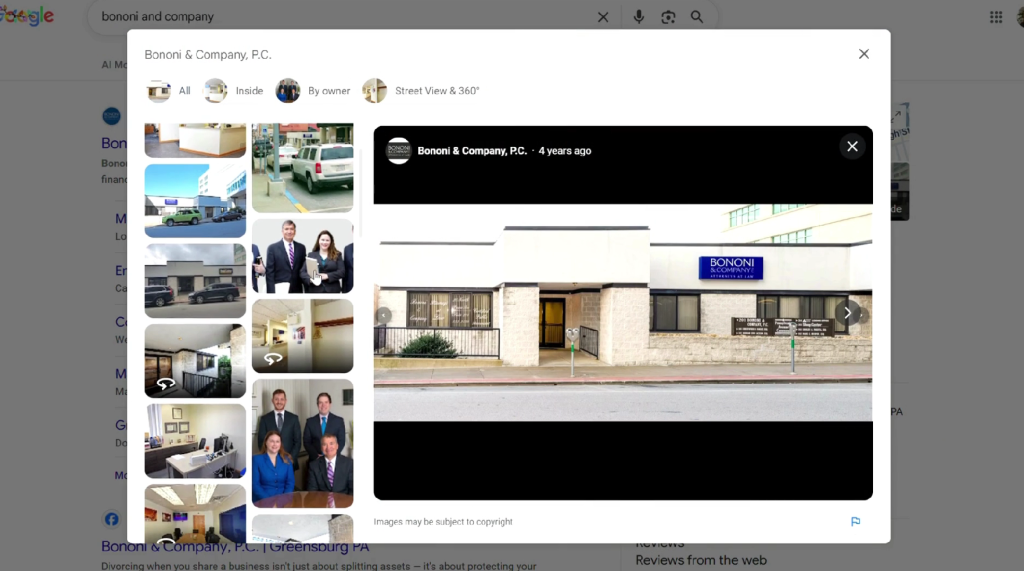
3. Upload 10+ High-Quality Photos
Include:
Your team
Office interior/exterior
Branded signage
Community involvement Make sure these are professionally shot or well-lit and clear. These visuals build both trust and recency signals.
4. Post Weekly Updates
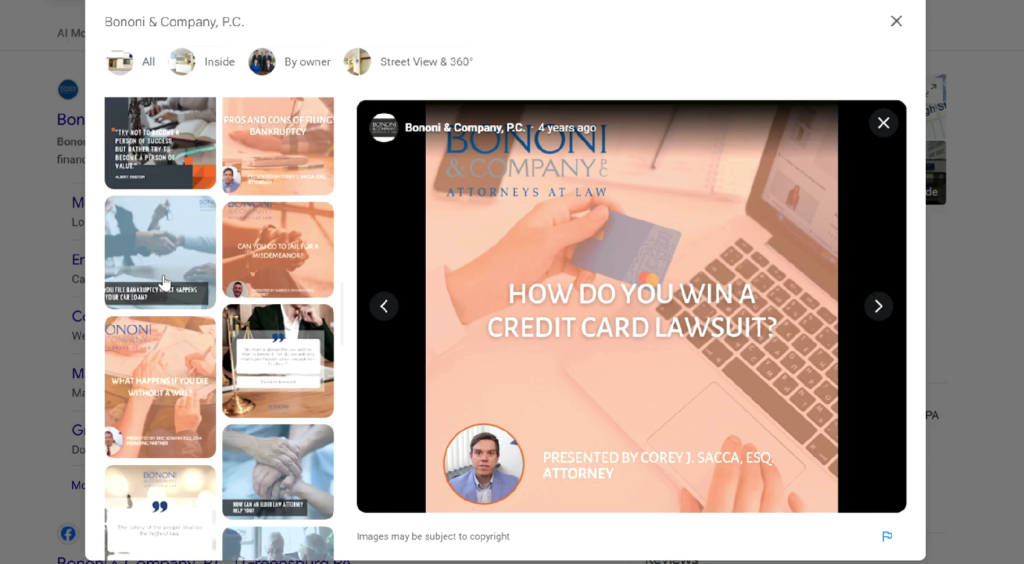
These can be short and simple:
Anonymized client wins
Answers to common legal questions
Recaps of recent blog posts
Behind-the-scenes updates
Video clips
This shows both clients and algorithms that your firm is active and relevant.
5. Respond to Every Review
Yes, even the bad ones. A calm, professional reply goes a long way in proving credibility.
And remember: Reviews should include keywords like “divorce attorney in Pittsburgh” — so don’t be afraid to politely ask happy clients to mention specifics.
6. Audit Your Listings with a Tool
Use a citation management tool like BrightLocal to:
Find inconsistent or duplicate listings
Fix NAP (name, address, phone) mismatches
Submit your info to 50+ directories
This creates authority and trustworthiness across the web.
7. Align Your Schema Data
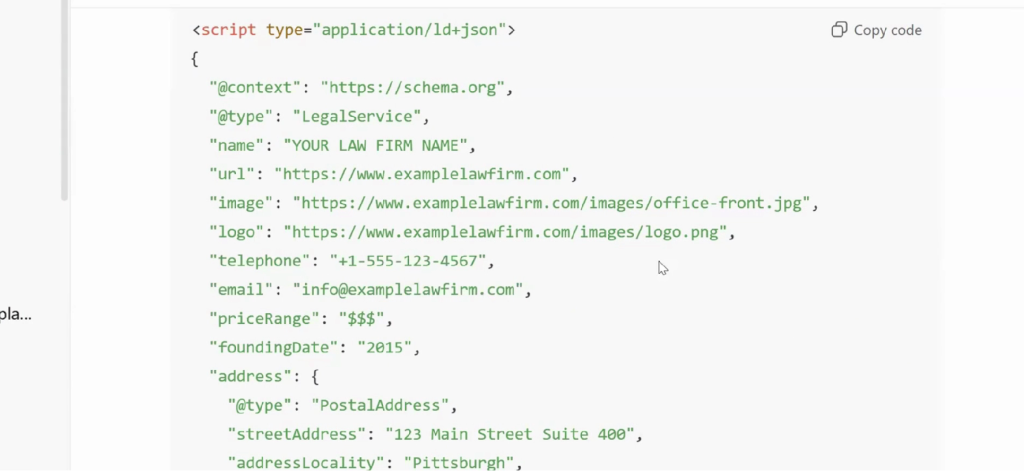
Make sure your website schema (the backend data search engines read) matches your GBP exactly. If you’re using structured data like LocalBusiness or Attorney schema, they need to be aligned. In our last article, we discussed the best schema to implement as a law firm.
This can get tricky — it’s something we specialize in at IFTS.
What Happens If You Ignore This?
Your visibility drops — both in traditional and AI search
You lose out on local clients actively searching for help
AI models may recommend your competitors instead, simply because their data is more verifiable
You miss out on the most valuable type of lead — high-intent local searchers
Want the Easy Version? We’ve Got You Covered!
We created a free Google Business Profile Optimization Checklist for Law Firms. It walks you through everything above — step-by-step — and includes bonus tips we use with our own clients.
And if you’d like us to take this off your plate — including posting, reviews, schema, and citation cleanup — we do it all under our Local SEO + AI Optimization Package designed just for law firms.