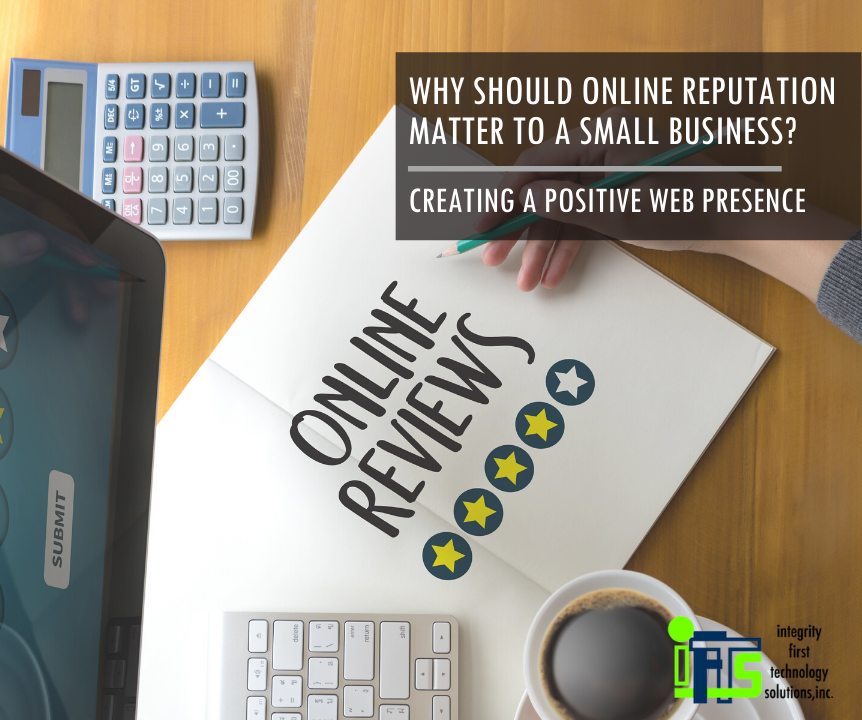
Why Should Online Reputation Matter to a Small Business?

Small businesses (especially those with local brick and mortar locations) seem to underestimate the importance of having a positive online reputation.  Without national or international customers, you may ask – “What’s the big deal?”

The big deal is that 82% of searches done online are followed up with an in-store visit!

It is very clear that local consumers are utilizing the internet to research businesses close to them.  The real question is, “What is the internet telling them about you?”

Any business that is not taking this seriously risks losing business…to your neighbors that position themselves online well (even if their product isn’t better than yours)! 

Just How Important Is It to Create a Positive Web Presence?

When looking for great service or a great price, local consumers turn to their phones and tablets.  With just a few clicks, they are able to peruse Google, Bing, social media, other review websites and forums for businesses that have exactly what they are looking for.  

Your company may have an amazing product at an unbeatable price with the world’s best customer service, but if your online presence does not reflect this and you have negative social signals, you will have a very hard time convincing new customers to trust you…and pay for your product.

Many people are using word of mouth on social media, online reviews and company content to make informed buying decisions.  In fact, more than 90% of people trust online reviews as much or more than a recommendation from a friend or colleague!

Two important questions to ask yourself when it comes to your online presence are:

  • When your ideal client searches for your product (or service) near your location, do you show in the search results or the maps results?  
  • If so, does he or she see a professional online face to the world with glowing reviews?  

If you answered “No” to either of the previous questions, the chances are that you just lost a great customer.

What are the Benefits of Online Reputation Management?

You need to have a positive web presence for the survival of your business.  It can help:

  • Establish your credibility with positive testimonials
  • Give you an edge over your competition
  • Build trust with current and future clients

Position your company as the first and best choice for your ideal clients.  When they are researching, you need to be the obvious decision.

A well-positioned online reputation is also your best sales person, working for you 24/7/365, especially to those people in your community searching for your specific offering.

Finally, having good reputation management can help you rank higher organically in search engine results, which will expose your business to more customers.  Good reviews that mention where you are, what you do and your company name will help tell Google a bit more about your offerings.

How Can a Small Business Build a Positive Online Reputation?

Your website, print advertisements and social media posts are not the only things that make up your web presence.  It is a much wider net than most realize.  Your online reputation does include those things, but it also is made up of reviews from various review sites, comments on your website or blog, “complaint forum” threads, “Top 10” lists that your company may have made, photos tagged with you or your business and much more.  Anywhere that you (or your business) is mentioned, tagged, linked to online – that is all part of your online presence.

Managing all of this seems like it could be akin to “herding cats”, but there are a few impactful steps that you can concentrate on to start.  This will help ensure the future success of your company.

Step 1 – Monitor Your Online Reputation

The first step to taking control of your online reputation is to monitor it daily.  You can handle this yourself or you can outsource this activity, but it is very important that someone is watching.

You need to make sure that you know exactly what your ideal client is looking at online about you.  If you find any negative information, be sure to remedy that quickly.  With so many products and services available to today’s consumer, there is no reason for him or her to trust you (or buy from you) if there is negative information readily available about your business.

Step 2 – Acquire Positive Reviews and Mitigate Negative Reviews

Online reviews are one of the major factors when it comes to your online reputation.  Remember, 90%+ of people trust online reviews as much as or more than a friend or colleague.  This is why there are more important than any content that you could create.

How many times have you seen a company with multiple one-star reviews and decide to buy from them anyway?  I would bet on a very small amount.

Be sure to create an automated system for monitoring, soliciting and responding to reviews that you receive.

If you happen to receive a negative review, it is imperative that you respond to it quickly and with a level head.  Remember, your response is for your future clients and not the person that left the bad review.  Be sure to apologize that they had a negative experience and offer to talk about their issue offline.  This way, people can learn something positive about your company (that you care about your customers) from a negative review.

Step 3 – Get on Social Media

Where do your clients hang out online?  Are they on Facebook? Twitter? Instagram? LinkedIn?

Do a little research and find out where they are most likely to be active.  Then, concentrate on those social networks and build your profile to be attractive to your ideal client.  Be sure to completely fill in the profile and include photos and videos to keep it engaging.

By keeping your social media simple, it will help you avoid overwhelm and really concentrate on activities that will give you the best ROI.  Create a schedule for posting regularly and use a tool that helps you automate the process.  This allows you to use social media for your business, but cut the time that it takes in half.

Leveraging Your Online Reputation

You’ve worked hard on your business over the years to build up your name!  Don’t jeopardize that fact by neglecting to build and monitor a positive online presence.

Overwhelmed or unsure where to start?  Contact IFTS to learn more about our online reputation management program and steps you can take to better position your business.
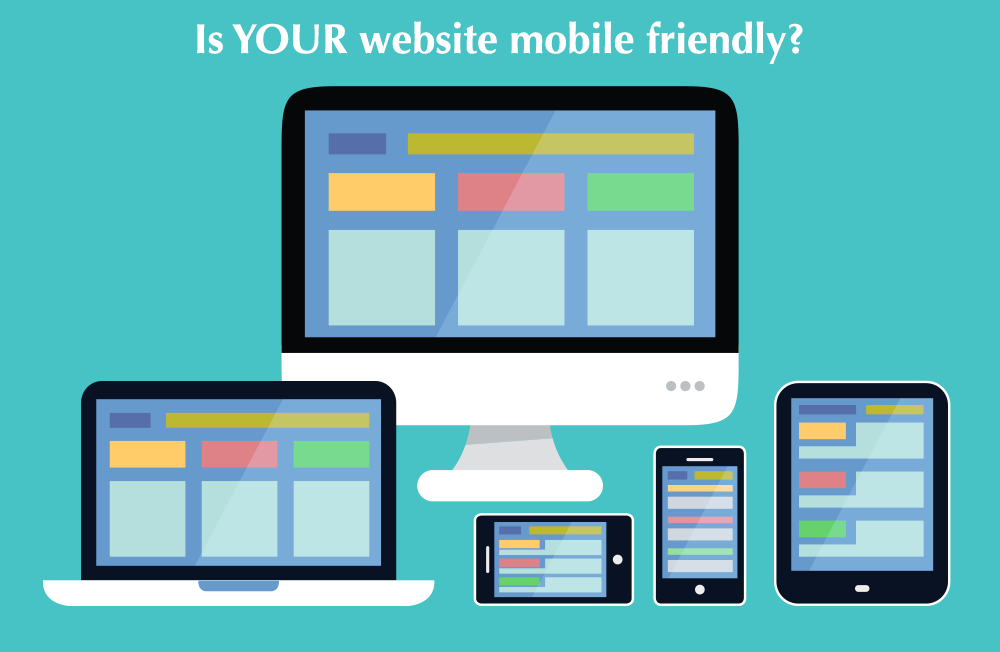

Google wants YOUR website to be mobile friendly right NOW…Is it?

Is your website mobile friendly?

According to Google’s Webmaster Blog, “To improve the mobile search experience, after January 10, 2017, pages where content is not easily accessible to a user on the transition from the mobile search results may not rank as highly.”

What does this mean for your business?  

If you want to rank highly on Google’s search results, your website has to be considered mobile friendly.


What does mobile friendly even mean?

When you open a business’s website on your phone and you have to pinch the screen to zoom in so that you can read it, that is indicative of a non-mobile friendly site.  The website does not distinguish how it shows up based upon the device on which it is being viewed.  If you make it more difficult for someone on your website to access information, they are much more likely to leave.


Why did Google do this?

According to Marketing Land, 60% of consumers time is spent browsing the internet on their mobile devices.  Additionally, 75% of people will search on their phone for a business that they want to connect with  (Google Partners).

Google wants to make browsing the internet as easy and as safe as possible for the average web user.  Therefore, they are going to return websites in the search results that they believe exhibit these traits.  If you are not one of these websites, your ranking position is likely to drop.

Even worse, if your competition IS one of those mobile friendly websites, their position is likely to rise.


What do I need to know about Google’s mobile friendly algorithm?

Important updates to be aware of are (Search Engine Land):

  • The new mobile friendly algorithm was rolled out in January 2017
  • It is an on or off algorithm, which means that you are 100% mobile friendly or you are not
  • It will be on a page-by-page basis


How do I know if my site is mobile friendly?

Google has released a tool where you can check your site for mobile friendliness: https://search.google.com/test/mobile-friendly


If you have employed one of the following techniques, your website will be considered mobile friendly:

  1. Adaptive Design: Your website changes the content served based on the viewing device.
  2. Responsive Design: Your website has a fluid layout that changes based on the viewing device.
  3. Mobile-Only site: You have a separate mobile site that shows only on mobile devices.  This is no longer recommended because Google indexes your mobile site only.


What should I do if my website is not mobile friendly?  I want to be returned highly in the search results!

If you do not have a mobile friendly website, there are four options to explore.

  1. Additions to Existing Website:  You can make responsive additions to your existing website that will allow the site to account for the viewing device.
  2. Website Redesign:  You can redesign your website as a responsive website, which will ensure that it shows properly on all devices.  Additionally, you can add in other changes for other Google updates, such as the new SSL requirement.
  3. Create a Separate Mobile Site:  You can keep your site as is and have a mobile site that is served only to mobile users.  Again, this is not recommended because Google now indexes your mobile site only.
  4. Do Nothing: If you do not want to rank highly on Google’s search algorithm, then you can leave your site as is.


Need help implementing options one, two or three?  Contact IFTS, Inc. for more details.


What is Responsive Web Design and Do I Need It?

Responsive web design (RWD) is a nifty and innovative technique that dynamically adjusts how your website presents itself and interacts with users, based on the device they are using. In today’s digital landscape, where mobile devices have surpassed desktops in terms of usage since 2014, almost all modern websites employ RWD. It’s undeniable that designing a website solely for desktops won’t cut it anymore when it comes to delivering a seamless user experience on mobile devices.

When mobile versions of websites were introduced in the past, they often lacked full functionality and content compared to their desktop counterparts. Users were not willing to compromise when accessing websites on their tablets or phones. However, responsive design entered the scene and saved the day by ensuring that all information and functionality were available to users, regardless of the device they were using. The only difference lies in how the content is displayed.

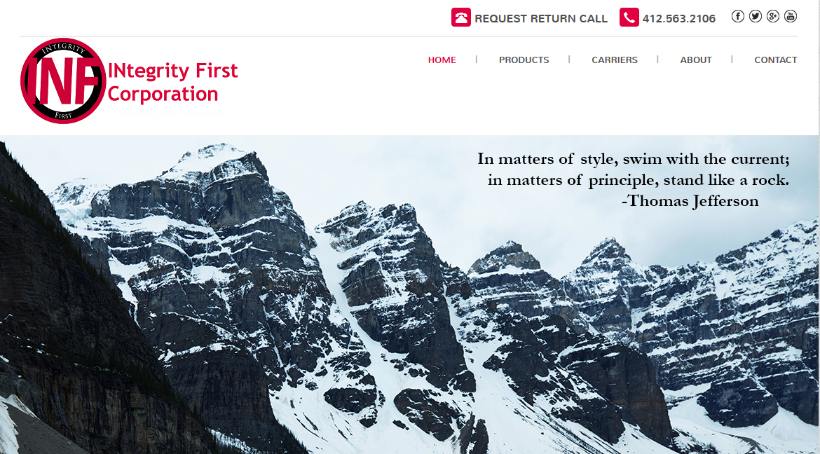
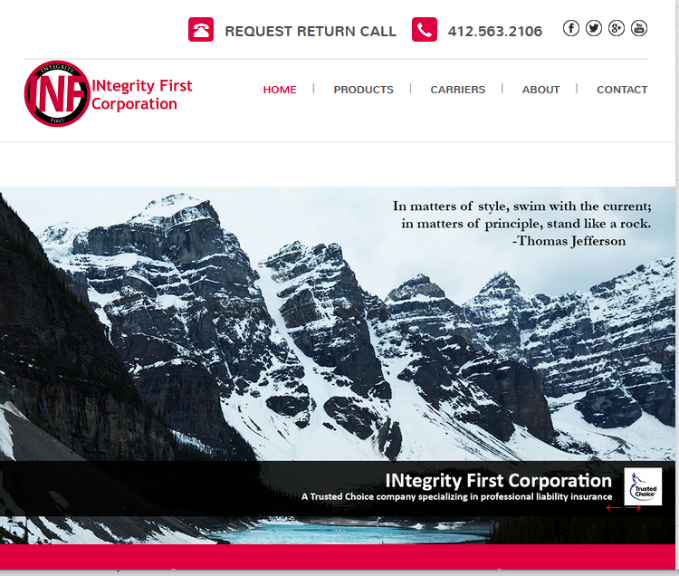
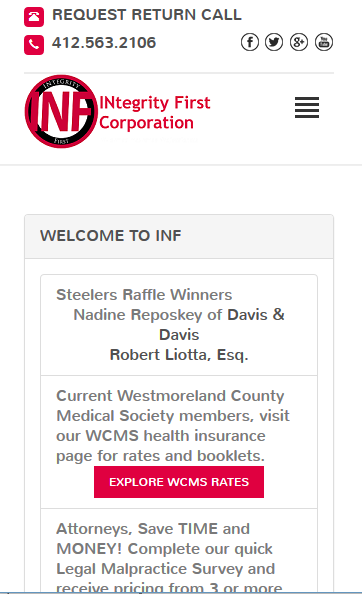
To get a better idea of how responsive web design works, take a look at Integrity First Corporation’s stylish website. Their website serves as an excellent example of how RWD seamlessly adapts to different devices. The screenshots provided below showcase how the site appears on desktops, tablets, and phones, highlighting the flexibility and adaptability of responsive design.

INFDesktopExampleImage
Figure 1. INF Desktop Screenshot

Figure 1 is the site on a desktop.  Note how the main menu and social media information is to the far right.

INFTabletExampleImage
Figure 2. INF Tablet Screenshot

Figure 2 is the site on a tablet.  Note how the main menu and social media information go across the whole top of the page now because the available screen display is reduced.  Additionally, the mountain picture is smaller and has lesser resolution to speed load time.

INFPhoneExampleImage
Figure 3. INF Mobile Phone Screenshot

Finally, Figure 3 is the site on a mobile phone.  Because phones have a much smaller processor in them, the main picture drops completely and only the information is displayed to increase load time.  The menu is now a drop-down in the upper-right hand corner so that it takes up less valuable viewing space.  Additionally, the phone number is now a link that when touched, will prompt your phone to dial it.

If you are currently in the process of creating a website or giving your existing one a facelift, it is crucial to ensure that it is responsive. While it may require some extra effort during the designing and building phases, the benefits of a responsive website will more than make up for it in the end. By attracting and retaining satisfied customers, you will create a positive user experience that sets your website apart from the competition.

Let us know if you need help with improving your website design by contacting si@iftsdesign.com!