
Why Schema Markup Is the Secret Weapon Your Law Firm Website Needs for AI Search

If your law firm’s website has great content but still isn’t showing up in AI-powered search results, the problem may be hidden in your code.

It’s not your keywords.

It’s not your backlinks.

It’s your schema markup — and if you’re missing it, you’re practically invisible to Google’s featured snippets and AI tools like ChatGPT, Gemini, Grok and Perplexity.

In this post, we’ll break down what schema is, why it’s critical for AI visibility, and how law firms can start using it — the right way.

What Is Schema Markup?

Schema markup (also known as structured data) is a type of code that tells search engines and AI tools what your content means, not just what it says.

Think of it like adding labels to a filing cabinet:

  • Instead of a long document labeled “About Us,” schema tells AI, “This section is a licensed attorney bio.”
  • Instead of a wall of text, schema says, “This block is a client review.”
  • Instead of just listing practice areas, schema identifies them as “services provided.”

This markup is invisible to visitors — but search engines and AI tools rely on it to decide whether your site is accurate, credible, and worth showing.  So, it sits behind the scenes as a little script that runs only for the bots crawling your site.

Why Schema Is Critical for Law Firm SEO and AEO

Search is changing fast. By 2027, AI-driven search tools are expected to replace traditional search engines for most legal queries.

But unlike Google, these tools don’t show 10 links.

They show one answer, maybe two – and if your site isn’t structured to feed that answer, it won’t get picked.

Schema markup gives your site the structure that AI assistants understand and prioritize.

Here’s what schema helps with:

  • Showing up in featured snippets, FAQs, and voice results
  • Getting indexed more accurately
  • Improving click-through rates by enhancing your search appearance
  • Making your law firm the “single answer” AI tools display

This is the future of AEO (Answer Engine Optimization). Schema is no longer a bonus — it’s a requirement.

5 Schema Types Every Law Firm Should Be Using

Not all schema is created equal. 

Here are the five types we recommend implementing immediately on law firm websites:

1. LocalBusiness Schema

This tells AI your business is real, local, and verified — critical for Local SEO and Google Maps.

Include:

  • Name, address, phone (NAP)
  • Hours of operation
  • URL and email
  • Price range
  • Bar association and license details


Use the code below as a guide:


<script type=”application/ld+json”>

{

  “@context”: “https://schema.org”,

  “@type”: “LegalService”,

  “name”: “Ivol Legal Group”,

  “image”: “https://www.ivollegal.com/images/logo.png”,

  “@id”: “https://www.ivollegal.com”,

  “url”: “https://www.ivollegal.com”,

  “telephone”: “(412) 555-1234”,

  “address”: {

    “@type”: “PostalAddress”,

    “streetAddress”: “123 Main St Suite 200”,

    “addressLocality”: “Pittsburgh”,

    “addressRegion”: “PA”,

    “postalCode”: “15222”,

    “addressCountry”: “US”

  },

  “priceRange”: “$$”,

  “openingHours”: “Mo-Fr 09:00-17:00”,

  “geo”: {

    “@type”: “GeoCoordinates”,

    “latitude”: 40.4406,

    “longitude”: -79.9959

  },

  “sameAs”: [

    “https://www.facebook.com/ivollegal”,

    “https://www.linkedin.com/company/ivol-legal-group”,

    “https://www.youtube.com/@ivollegal”,

    “https://www.justia.com/lawyers/pennsylvania/ivol-legal-group”

  ]

}

</script>

2. Attorney / Person Schema

This needs to be on each attorney bio page.

Add this to each attorney bio page to highlight:

  • Education and credentials
  • Bar numbers and certifications
  • Speaking engagements or articles published
  • Awards or honors

This boosts E-E-A-T (Experience, Expertise, Authority, Trustworthiness), which AI and Google love.


Use the code below as a guide:

<script type=”application/ld+json”>

{

  “@context”: “https://schema.org”,

  “@type”: “Person”,

  “name”: “Stacey A. Ivol, Esq.”,

  “image”: “https://www.ivollegal.com/images/stacey-ivol.jpg”,

  “jobTitle”: “Founder & Estate Planning Attorney”,

  “worksFor”: {

    “@type”: “LegalService”,

    “name”: “Ivol Legal Group”

  },

  “url”: “https://www.ivollegal.com/team/stacey-ivol”,

  “sameAs”: [

    “https://www.linkedin.com/in/staceyivol”,

    “https://www.avvo.com/attorneys/15222-pa-stacey-ivol-123456.html”

  ],

  “alumniOf”: {

    “@type”: “CollegeOrUniversity”,

    “name”: “University of Pittsburgh School of Law”

  },

  “memberOf”: “Pennsylvania Bar Association”,

  “knowsAbout”: [“Estate Planning”, “Wills”, “Trusts”, “Probate”],

  “description”: “Stacey A. Ivol is an experienced estate planning attorney based in Pittsburgh, PA with over 15 years of experience helping families protect their legacy.”

}

</script>

3. FAQPage Schema

FAQ schema allows your site’s questions and answers to be featured directly in search results or cited by AI tools.

We recommend creating FAQ sections for:

  • Each practice area
  • Legal procedures (e.g., “How long does probate take in Pennsylvania?”)
  • General law firm policies


Use the code below as a guide:

<script type=”application/ld+json”>

{

  “@context”: “https://schema.org”,

  “@type”: “FAQPage”,

  “mainEntity”: [

    {

      “@type”: “Question”,

      “name”: “Do I need a will in Pennsylvania?”,

      “acceptedAnswer”: {

        “@type”: “Answer”,

        “text”: “Yes, a will ensures your assets are distributed according to your wishes and can simplify probate for your family.”

      }

    },

    {

      “@type”: “Question”,

      “name”: “How long does probate take in Allegheny County?”,

      “acceptedAnswer”: {

        “@type”: “Answer”,

        “text”: “Probate typically takes 9–12 months in Allegheny County, but it can vary depending on the complexity of the estate.”

      }

    }

  ]

}

</script>

4. Service Schema

Each area of practice (AKA service) like estate planning, family law, bankruptcy, etc. should have its own page — and its own schema.

This improves targeting and helps you show up when people search “bankruptcy lawyer in Westmoreland County,” instead of just “lawyer.”


Use the code below as a guide:

<script type=”application/ld+json”>

{

  “@context”: “https://schema.org”,

  “@type”: “Service”,

  “serviceType”: “Estate Planning”,

  “provider”: {

    “@type”: “LegalService”,

    “name”: “Ivol Legal Group”,

    “url”: “https://www.ivollegal.com”

  },

  “areaServed”: {

    “@type”: “Place”,

    “name”: “Allegheny County, Pennsylvania”

  },

  “description”: “Comprehensive estate planning services including wills, trusts, powers of attorney, and healthcare directives for individuals and families in Pennsylvania.”,

  “url”: “https://www.ivollegal.com/services/estate-planning”,

  “availableChannel”: {

    “@type”: “ServiceChannel”,

    “serviceLocation”: {

      “@type”: “Place”,

      “address”: {

        “@type”: “PostalAddress”,

        “addressLocality”: “Pittsburgh”,

        “addressRegion”: “PA”

      }

    }

  }

}

</script>

5. Article Schema

Blogs and educational content should be marked up as articles, with:

  • Author info
  • Published and updated dates
  • Tags for practice areas or jurisdictions

Google rewards recency. Article schema helps prove your site is active and trustworthy.


Use the code below as a guide:

<script type=”application/ld+json”>

{

  “@context”: “https://schema.org”,

  “@type”: “Article”,

  “mainEntityOfPage”: {

    “@type”: “WebPage”,

    “@id”: “https://www.ivollegal.com/blog/schema-for-law-firms”

  },

  “headline”: “Why Schema Is the Secret to Law Firm SEO in 2025”,

  “image”: “https://www.ivollegal.com/images/blog/schema-law-firms-cover.jpg”,

  “author”: {

    “@type”: “Person”,

    “name”: “Stacey A. Ivol”

  },

  “publisher”: {

    “@type”: “Organization”,

    “name”: “Ivol Legal Group”,

    “logo”: {

      “@type”: “ImageObject”,

      “url”: “https://www.ivollegal.com/images/logo.png”

    }

  },

  “datePublished”: “2025-12-15”,

  “dateModified”: “2025-12-15”

}

</script>


How to Add Schema to Your Law Firm Website (Safely)

Here are a few ways to get started — but be careful: it’s easy to implement schema incorrectly and accidentally break your site or hurt your rankings.

Method 1: WordPress Plugins

If your site runs on WordPress, tools like RankMath offer built-in schema functionality.

They let you:

  • Set default schema types per page/post
  • Customize person, service, and local business schema
  • Add FAQ blocks easily

Tip: RankMath tends to offer more granular schema control than most other plugins

Method 2: Online Schema Generators

If you’re using Squarespace, Weebly, Wix, or a custom HTML site, you can use free tools like:

These tools let you paste in your firm details and generate copy-paste JSON-LD code.

BUT: You still need to insert it into your site properly and test it using Google’s Rich Results Test or Schema.org’s validator.

Method 3: AI-Generated Schema (Advanced)

Tools like ChatGPT can generate schema markup if you prompt them correctly, but be cautious — AI sometimes produces invalid or incomplete code.

Always:

  • Validate the code in Schema.org’s validator
  • Use a staging site to test before going live
  • Avoid overlapping or conflicting schema types

What Happens If You Get Schema Wrong?

Bad schema can:

  • Cause rich results to disappear from Google
  • Break your site’s code or display
  • Confuse AI tools and damage trust signals

That’s why, even though tools exist, we don’t recommend law firms DIY this unless they’re very tech-savvy.

Want Schema That Works — Without the Risk?

At IFTS, we implement search-optimized schema as part of our AI Content + AEO Packages for law firms. Each package includes:

  • LocalBusiness, Attorney, and Service schema setup
  • FAQ content with proper markup
  • Article schema for blog content
  • Directory cleanup (Avvo, Justia, bar associations)
  • Schema validation and ongoing monitoring

You’ll be visible not just on Google, but on AI tools like ChatGPT, Perplexity, and Gemini — the new gatekeepers of search.

Book a free strategy call and we’ll review your current site for visibility gaps — including schema, content, and AI-readiness.

Or watch our full video breakdown here:

Watch: The Schema Secret Law Firms Are Missing 

Schema markup may be invisible — but it’s the most visible thing to AI search engines.

The law firms who adopt it now will dominate in tomorrow’s search results.

The ones who ignore it?

They may never be found again…

Why Most Law Firm Websites Will Vanish from AI Search by 2027 (And What You Can Do to Survive)

If your law firm’s website still acts like a digital brochure — static, keyword-stuffed, and rarely updated — you’re heading straight for invisibility.

We’re not just talking about slipping down the Google rankings. We’re talking about disappearing from search altogether.

Because by 2027, most legal searches won’t start on Google at all.

They’ll start — and end — with AI.

Welcome to the New Search Paradigm

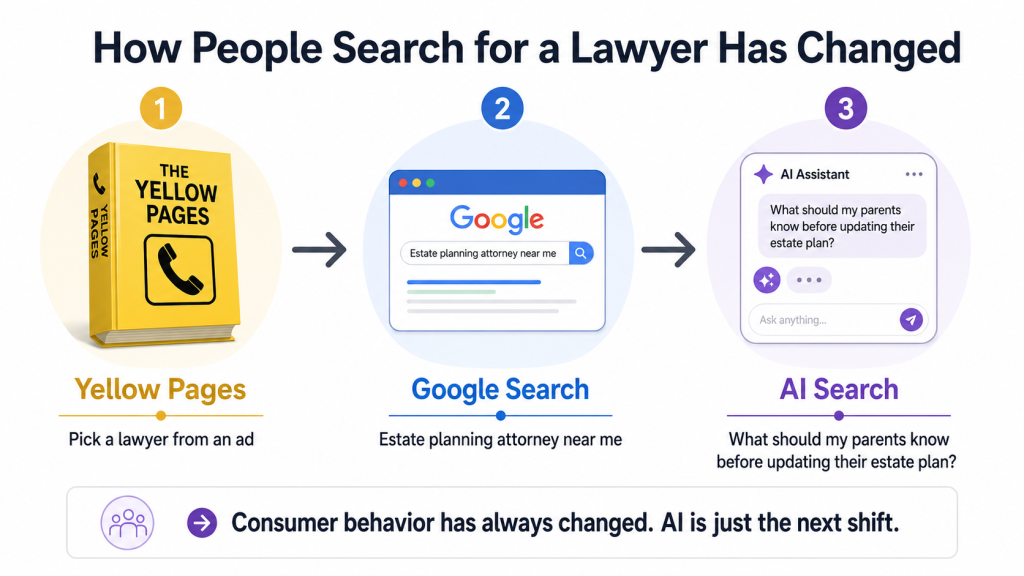
Tools like ChatGPT, Google Gemini, and Perplexity are changing how people get answers. Instead of typing a keyword and scanning 10 blue links, users now ask full questions and expect one clear answer.

Here’s the problem:

AI assistants don’t show options — they choose winners.

And if your website doesn’t have the right structure, clarity, and trust signals, it won’t be chosen. It won’t even be seen.

In this post, we’ll break down the six biggest reasons law firm websites are disappearing from AI-driven search — and exactly what you can do today to stay visible, relevant, and ahead of your competitors.

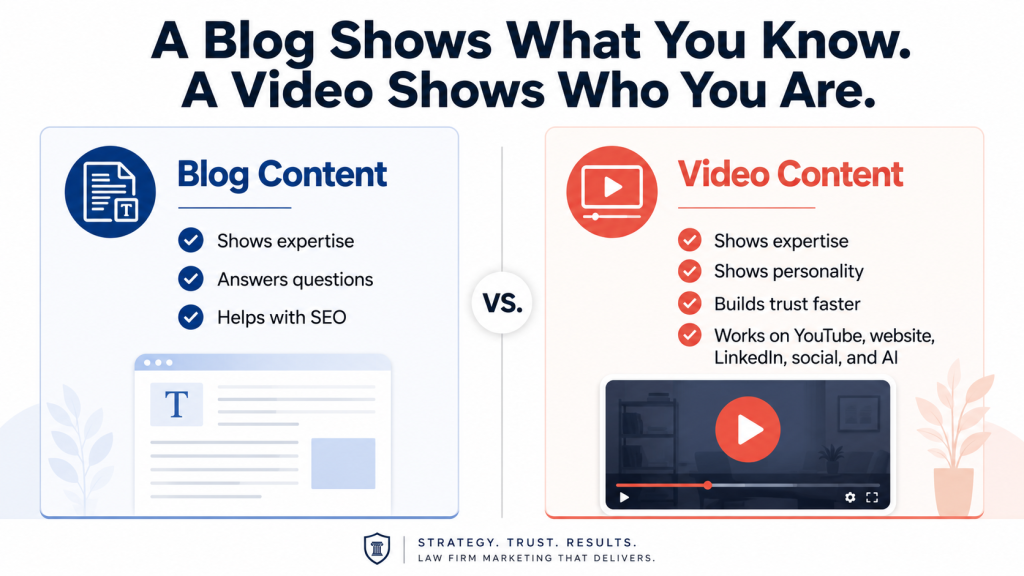
🎥 Prefer to watch? Click here to watch the full video version of this article as part of our AI for Law Firms series.

1. You’re Still Optimizing for Google, Not AI

Old SEO tricks — like keyword stuffing, bloated meta tags, and vague service pages — don’t cut it anymore.

AI rewards websites that are clear, structured, and easy to parse.

Actionable Fixes:

  • Use a proper heading structure (H1, H2, H3) to organize your content logically.

  • Add FAQ sections that answer common questions in plain English.

  • Apply legal schema markup (like Attorney, LocalBusiness, and FAQPage) to give AI bots extra context.

If your content is built to be read by humans but parsed by AI, you’re on the right track.

2. Your Site Isn’t Indexed or Structured for AI Parsing

LLMs (large language models) don’t read like humans. They scan for structure, clarity, and patterns. If your site is one long block of text with no markup, headers, or internal linking — it’s invisible to the machines.

Actionable Fixes:

  • Use headers that clearly introduce each section.

  • Internally link between your blog, attorney bios, and service pages.

  • Add outbound links to trusted profiles (like your bar listing or LinkedIn).

  • Implement schema markup so AI knows exactly what’s on each page.

This technical groundwork helps AI categorize and trust your content — which is a big factor in being chosen.

3. Your Content Is Outdated or Incomplete

AI values recency. If your last blog was in 2019 or your attorney bios haven’t changed in five years, you’re signaling that your site may be stale or abandoned.

Actionable Fixes:

  • Add “Last Updated” dates to every key page and blog post.

  • Include citations to case law, state statutes, or bar resources.

  • Regularly update bios with new credentials, case wins, or speaking engagements.

The more current your content appears, the more relevant it becomes to both humans and machines.

4. You’re Not Leveraging External Trust Signals

AI doesn’t just trust what’s on your site — it cross-checks your credibility across the web. That includes legal directories, bar associations, review platforms, and even social media.

Actionable Fixes:

  • Submit your firm to all major legal directories (Avvo, Justia, Super Lawyers, etc.).

  • Use a tool like BrightLocal to ensure your name, address, and phone number (NAP) is consistent across 50+ online listings.

  • Link your website to your LinkedIn, Google Business Profile, and bar association listings.

  • Start a YouTube channel and match your video content with your blog content.

The goal? Make sure AI sees you as a reputable source from every angle.

5. You’re Still Chasing Keywords Instead of Search Intent

People don’t just type “divorce lawyer Pittsburgh” anymore. They ask questions:

  • “How long does divorce take in Pennsylvania?”

  • “What’s the difference between legal separation and divorce in Allegheny County?”

AI tools match these natural questions to the intent behind them — and reward clear, jargon-free answers.

Actionable Fixes:

  • Use natural language in your content, not legalese.

  • Create blog posts that answer common questions from your ideal clients.

  • Use tools like Google’s “People Also Ask,” AlsoAsked.com, or Answer the Public to uncover real questions people are asking.

When you focus on intent, not keywords, your content becomes useful — and usable by AI.

6. You’re Not Creating Ongoing Content That AI Can Learn From

Here’s the biggest mistake we see: static websites that never get updated.

Even if your structure and trust signals are solid, AI values activity. It learns from patterns, updates, and evolving insights.

Actionable Fixes:

  • Publish 1–2 blogs or FAQs each month.

  • Focus on ultra-specific local topics like “What happens if I die without a will in Westmoreland County?”

  • Update older content with new attorney experience, procedural changes, or citations to recent case law.

Publishing ongoing content tells AI: We’re active, we’re accurate, and we’re worth recommending.

What Happens If You Ignore This?

Law firms that don’t adapt to the AI search model will face a slow decline in:

  • Organic traffic

  • New client leads

  • Referral confidence

  • Long-term visibility

Because in a world where AI tools pick one firm as the answer — you’re either that firm, or you’re invisible.

Want to Be the Firm AI Recommends?

We help law firms build AI-optimized websites and create consistent, structured content that earns trust from tools like ChatGPT, Gemini, and Perplexity.

📦 Our AI Content Packages include:

  • Weekly or monthly blog and FAQ creation


  • Legal schema markup and internal linking


  • Directory submission and NAP cleanup


  • Recency updates and AI trust signals


Even better? Our AI Twin packages only require one hour of your time per quarter.

📅 Click here to book a free strategy call with IFTS

🎥 Watch the video version of this post here

The BRAIN Framework: How Law Firms Can Dominate AI Search in 2026

If your law firm is still chasing old-school SEO tactics like stuffing keywords into blog posts, you are missing the real game.

AI search is here now – and it plays by different rules.

Tools like ChatGPT, Gemini, Grok, and Perplexity don’t spit out 10 blue links anymore. They generate one recommended answer. 

If your firm isn’t that answer, you’re invisible.

So how do you become the answer AI recommends?

Introducing: The BRAIN Framework – This model outlines the five key elements that influence whether your firm’s content is trusted, selected, and cited by AI systems.  This will help with your Answer Engine Optimization (or AEO).

What Is the BRAIN Framework for AEO and Law Firms?

BRAIN stands for:

Brand

Rapport

Accessibility

Newness

Intent

Each piece plays a critical role in making your law firm discoverable—not just by humans, but by the AI tools your potential clients are increasingly turning to.

Let’s break down each component of BRAIN, with actionable steps you can take today.

B is for Brand: Get Your Law Firm Recognized Everywhere

AI systems don’t just read your site—they check your whole digital footprint.

They pull data from across the internet to confirm your law firm is real, consistent, and trustworthy.

What To Do:

  • Ensure your NAP (Name, Address, Phone) is consistent
    Your Name, Address, and Phone Number must be identical across all platforms—Google Business Profile, Yelp, Avvo, Justia, FindLaw, LinkedIn, your state bar listing, etc.
  • Use Schema Markup
    Embed LocalBusiness or Attorney schema in your website’s code. This helps AI tools and search engines categorize you correctly and associate you with your location and profession.

Link to authority profiles
Include outbound links on your website to your verified LinkedIn, state bar, or trusted directory profiles. AI sees this as third-party proof that you exist.

Law Firm Example

A firm with conflicting business names across different sites (e.g., “Johnson Legal Group” vs “Johnson & Associates”) might not be viewed as the same entity. AI may skip over them in favor of a consistent brand competitor.

R is for Rapport: Prove Your Firm Knows It All

AI doesn’t just want content—it wants content from credible, knowledgeable voices.

You don’t need to be a national law firm to build authority. 

You just need to prove that real attorneys with real credentials are behind your content.

What To Do:

  • Flesh out attorney bios
    Include bar numbers, education, court admissions, speaking engagements, and associations. AI tools check for these signals to verify expertise.
  • Get quality backlinks
    Seek links from reputable third-party sites—local media, chamber of commerce directories, legal organizations, or universities.

Cite your sources
Refer to official statutes, case law, or government sites. This shows your legal content is grounded in authority.

Law Firm Example

 A solo estate planning attorney who lists past CLE presentations and court cases on their bio page will score higher with AI than a firm that just posts “we’ve been serving clients since 1992.”

A is for Accessibility & Indexability: Make It Easy to Read (For Bots and People)

AI doesn’t “read” pages like humans do. It scans for structure and content.

That means your design, layout, and code matter just as much as the words on the page.

What To Do:

  • Use headings, bullets, and sections on your site
    Break up text with clear formatting. Include FAQs, numbered lists, and subheadings (H2/H3) for scan-ability.
  • Add internal links
    Link your blog posts to your attorney bios, your service pages to your contact page, and so on. This helps bots (and visitors) navigate your site.
  • Use Schema again
    Especially FAQPage schema for structured Q&A content. This markup boosts your chances of being pulled as a featured AI response.

Law Firm Example:

A criminal defense site with long, unformatted paragraphs will likely be skipped by AI tools. A competing firm with FAQ-rich service pages, internal links, and schema markup is much more likely to be quoted.

I is for Intent: Match What People Actually Ask

Old SEO was about stuffing keywords. 

New search, AEO —especially AI—is about matching user intent.

What does the client really want to know?

AI tries to interpret the why behind a question. If your content speaks to that, you’re in the running to be recommended.

What To Do:

  • Create local FAQs
    Answer client-specific questions like:

    • “How long does probate take in Allegheny County, PA?”
    • “What happens if I die without a will in Ohio?”
    • “What do I have to do for a second DUI?”

  • Use tools like AlsoAsked.com or askthepublic.com
    These platforms show real queries people are typing. Build content around those questions.

  • Speak like your clients
    Use plain English, not legalese. AI looks for content that’s accessible and answers questions in the way a layperson would ask.

Law Firm Example:

A personal injury attorney with a blog post titled “What is the statute of limitations in Pennsylvania?” is helpful. But a page titled “How long do I have to file a lawsuit after a car accident in PA?” is exactly what a potential client—and AI—wants to find.

N is for Newness: Keep Your Content Fresh

AI tools prioritize content that’s recent and updated. 

They don’t want to recommend outdated advice—especially in a field like law.

What To Do:

  • Add “last updated” timestamps
    Clearly show when a page or article was last reviewed.
  • Update old content
    Refresh statistics, case law, or legislation references at least once a year.
  • Post new content regularly
    You don’t need to blog daily—but at least monthly content signals that your firm is active and staying current.

Law Firm Example:

If your estate planning blog hasn’t been updated since 2018, AI may see it as stale and ignore it. But if you add new posts or update old ones quarterly, your authority and recency score goes way up.

Let’s Start Implementing the BRAIN Framework

If your law firm implements just three out of the five BRAIN pillars, you’ll already be ahead of most of your competitors online.

But if you commit to all five?

You’ll dominate AI search—and make your firm the trusted source that ChatGPT, Gemini, and Perplexity want to recommend.

Ready to Become AI’s #1 Answer?

We’ve developed AI-ready content packages specifically for law firms like yours. If you want to future-proof your marketing and lead generation, click here to learn more.

Watch the Video Version:

Don’t miss the video walkthrough of the BRAIN Framework, including real examples and visuals. [Watch it on YouTube here]. <<Audrey, add a link here

And if you haven’t seen our full AI for Law Firms playlist, it’s linked here — covering how AI picks answers, how to structure your content, and much more.