
AI Video Avatars for Law Firms — Consistent Video Without the Time Commitment

Most lawyers already know they should be on video.

They know video builds trust.
They know it helps potential clients feel more comfortable before reaching out.
And they know it puts a real voice and presence behind the firm.

The problem isn’t understanding the value.

The problem is the process.

Almost no one enjoys it — not because they don’t care, but because they don’t have the time.

Filming takes time.
Re-recording takes time.
Editing takes time.
And staying consistent quickly turns into another job.

Eventually, burnout hits — and posting online stops altogether.

That’s the real problem.
And it’s the part most conversations about video marketing completely skip over.

AI Didn’t Replace Professionals — It Removed Friction

There’s a lot of noise right now around AI and video.
And much of it misses the point.

AI isn’t about replacing professionals.
It’s not about removing people from the process.
And it’s not about pushing out content faster at any cost.

At its best, AI removes friction.

It handles repetition.
It supports consistency.
And it quietly takes care of the parts of video marketing that normally consume time.

That’s where creating your very own AI avatar comes in.

At IFTS, we build and manage AI-powered video avatars for law firms as a done-for-you service. Using advanced voice and visual modeling, we create hyper-realistic video content that looks and sounds like you — allowing your firm to publish professional video consistently without tying it to your schedule.

The real breakthrough isn’t AI avatars.

It’s how little time video requires
when the system is built correctly.

This Is Not a DIY AI Tool

Let’s be clear — this is not a DIY solution.

It isn’t a software login.
It’s not a template library.
And it’s not a “record 100 videos this weekend” strategy.

We don’t hand clients tools and ask them to figure things out.

We remove friction.

That distinction matters — especially for law firms that value professionalism, control, and predictability.

A One-Time Setup Designed to Be Simple

There is a setup process.
But it happens once — and it’s intentionally designed to be straightforward.

Most firms already have video somewhere:

  • Past recordings
  • YouTube clips
  • Internal or external content

If that exists, we often already have the voice — and sometimes even enough visual material to begin.

If additional footage is needed, the process is fully guided.
Clients aren’t guessing.
They aren’t troubleshooting.
And they’re never left on their own.

This one-time setup allows us to create:

  • A natural, consistent voice
  • A professional, on-brand visual presence

There’s no studio required.
No scripts to memorize.
And no repeated filming sessions.

Behind the scenes, experience, fine-tuning, and AI work together to make the result as realistic and consistent as possible. That work stays exactly where it belongs — behind the scenes.

Security and Verification Matter

A common and reasonable question we hear is:
How do you verify identity and keep this secure?

There is one live interaction required to create this system. 

It’s a short verification call — typically ten to fifteen minutes — and it happens once.

The call is required for verification, scheduled for the client, and fully guided.
There are no recurring meetings.
No weekly calls.
And no ongoing check-ins.

Once it’s complete, that step is finished.

From There, We Take Over

After setup, verification, and client approval of scripts used to fuel the avatar, the heavy lifting moves off the client’s plate.

Clients stay fully in control — without having to manage the process.

From their perspective, content simply appears while they continue focusing on growing the firm.

From that point forward, videos are created as if the firm recorded them directly:

  • Same voice
  • Same face
  • Same authority

Content shows up consistently — without tying visibility to an already packed schedule.

That consistency is what builds trust over time.

What Clients Don’t Have to Do

Let’s rewind for a moment.

Here’s what clients don’t have to deal with when using our AI avatar service:

  • No tireless weekly filming
  • No confusing lighting setups
  • No frustrating re-takes
  • No painful tech learning curve

And this part is especially important for law firms:

Nothing is ever shared without clear, final approval.

There’s nothing experimental.
Nothing risky.
And nothing that goes live unless the client is completely comfortable.

The Time Savings Add Up Quickly

To put this in real terms, most firms spend three to six hours per week trying to keep up with video.

Filming.
Re-filming.
Reviewing.
Coordinating schedules.

With our done-for-you system, that time goes away.

For most clients, the weekly time commitment drops to essentially zero — outside of brief approvals.

Why This Works Long-Term

This approach works because consistency beats perfection.

AI allows scale.
But strategy is what creates trust.

Viewers don’t care whether a video was filmed yesterday or three weeks ago.
They care about credibility.
And they care about seeing the same professional presence again and again.

The firms winning online right now aren’t posting more.

They’re posting smarter.

Trying to handle social video on your own almost always leads to burnout.
With an AI avatar doing the work for you, you can show up consistently for clients — without burning out.

A Smarter Way Forward

This is where content is going.

Not louder.
Not trend-driven.
Just smarter — and easier to sustain.

If video marketing has ever felt like it should be simpler than it is, this is why.

Curious if this fits your firm?

Explore whether this approach makes sense for your practice, your schedule, and your goals by clicking the link below.

No pressure.
No demos.
Just clarity — and a whole lot of time saved.

Contact us today to learn more. 

Get Found First: How to Optimize Your Law Firm’s Google Business Profile for Visibility and AI Trust

In today’s world of AI-driven search and hyper-local competition, having a great law firm website is no longer enough.

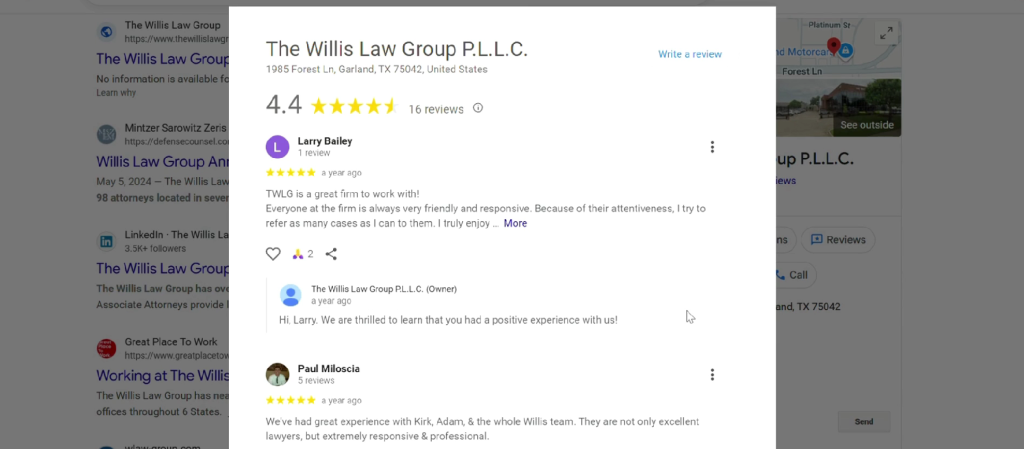
If your Google Business Profile (GBP) isn’t fully optimized, you’re not just invisible — you’re actively losing potential clients to firms who took the time to get it right. So, they may not be the best law firm, just the law firm with the best profile.

Even worse, AI tools like ChatGPT, Grok, Bard, and Perplexity are starting to use GBP data as a trust signal — meaning your ranking in both traditional and AI search could suffer if your profile is weak.

So what can your firm do about it?

Let’s walk through the key strategies and actions you can take this week to get your GBP in top shape — and set your firm up to win in both Google and AI search.

(Would you rather watch a video? Check out the video version of this post here)

Why Your Law Firm’s Google Business Profile Is More Important Than Ever

Google Business Profiles are no longer just for local coffee shops or restaurants.

For law firms, your GBP is a core part of your online presence, your reputation, and increasingly, your authority in the eyes of search engines and AI models. 

Tools like ChatGPT, for example, don’t blindly trust every website — they look for verifiable signals of business legitimacy and local authority. GBP is one of the strongest ones out there.

AI Regularly Uses GBP to Confirm:

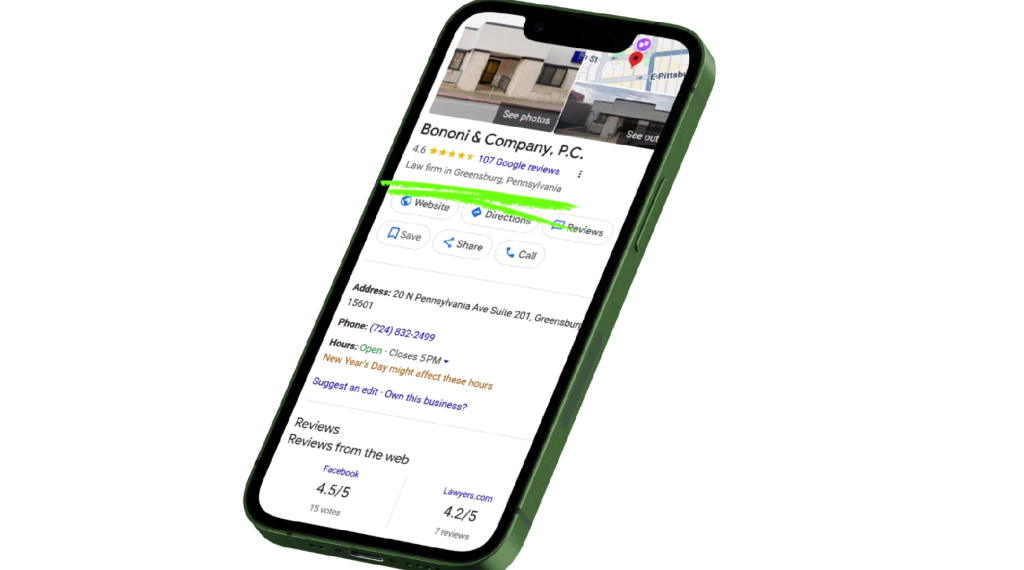
  • Your law firm actually exists and is active
  • Your practice areas match what your website says
  • Your firm has a strong reputation via reviews and listing consistency
  • You’re actively engaged in the community (through updates and interactions)

If your GBP is out of date, empty, or doesn’t match your site’s schema data, your firm is far more likely to be passed over — not because of poor legal skills, but because AI can’t verify you.

How AI and Google Evaluate Your GBP

To understand why this is so important, let’s break down how modern search engines and AI tools analyze your profile:

1. Verification

AI tools cross-check your GBP against your website and major legal directories (like Avvo and Justia) to confirm consistent name, address, phone number, and business hours.

2. Recency Signals

They scan your profile for recent activity — including weekly posts, photo uploads, review responses, and new Q&A updates. A “dead” profile raises red flags and is not likely to be used in an answer from AI.

3. Reputation Checks

Your average review score is only part of the equation. AI also looks for:

  • Frequency of reviews
  • Whether reviews mention practice areas
  • How you respond (or don’t)

4. Schema & Citation Matching

AI tools want to see alignment between your GBP data and your website schema, along with consistent citations across platforms like:

  • BrightLocal
  • Yelp
  • Avvo
  • Justia
  • FindLaw

If your GBP and site tell two different stories, you risk disappearing from AI search — even with great content.

Actionable Steps to Optimize Your Law Firm’s GBP

Want to take control of your visibility?

Here’s a checklist of what to do this week — no tech degree required.

1. Complete Every Field in Your Profile

  • Log into your GBP dashboard and ensure every section is filled out.
  • Include a client-focused business description — mention your practice areas and service location.

Not sure what to write? You can ask ChatGPT to draft a starting version for you.  Just give it the basic information about your firm and let it create your first draft.

2. Choose the Right Categories

  • Your primary category should reflect your core focus, e.g., “Personal Injury Attorney,” “Family Law Attorney,” or “Estate Planning Lawyer.”
  • Add secondary categories that match your services.

Pro tip: Spy on your top competitors — see what categories they’re using.

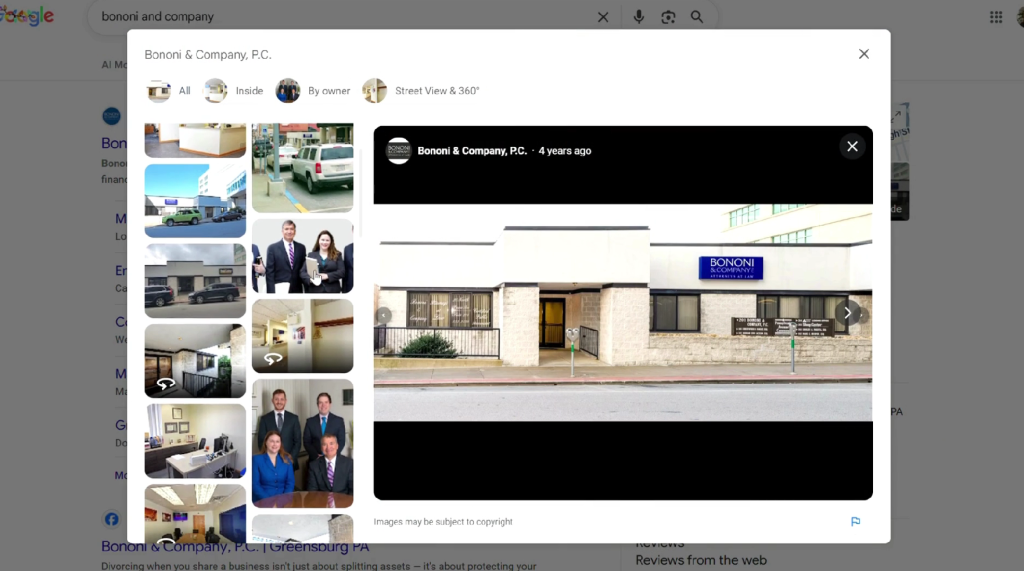
3. Upload 10+ High-Quality Photos

Include:

  • Your team
  • Office interior/exterior
  • Branded signage

Community involvement
Make sure these are professionally shot or well-lit and clear. These visuals build both trust and recency signals.

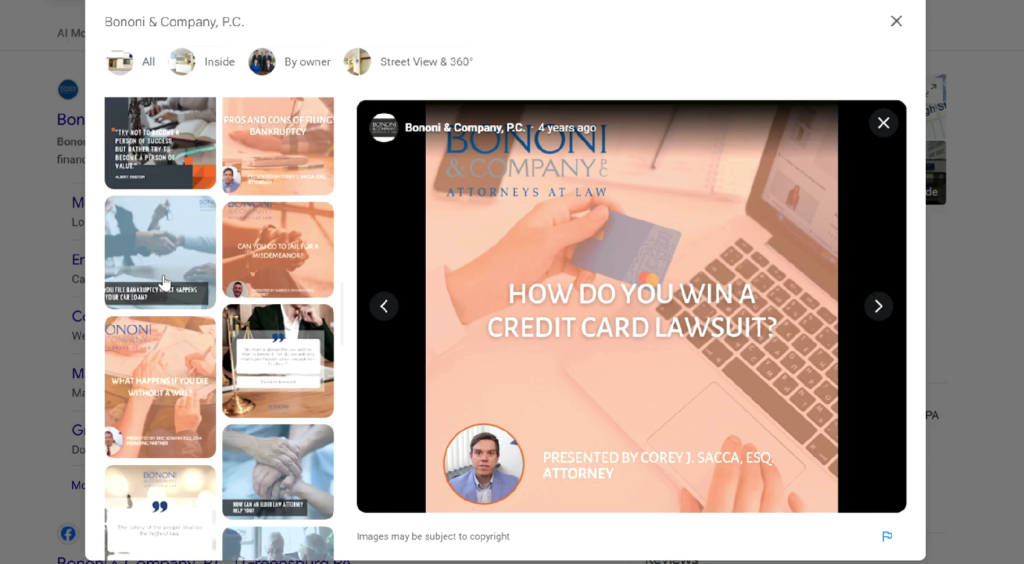
4. Post Weekly Updates

These can be short and simple:

  • Anonymized client wins
  • Answers to common legal questions
  • Recaps of recent blog posts
  • Behind-the-scenes updates
  • Video clips

This shows both clients and algorithms that your firm is active and relevant.

5. Respond to Every Review

Yes, even the bad ones. A calm, professional reply goes a long way in proving credibility.

(Need some help on how to respond to bad reviews? Check out this article!)

And remember: Reviews should include keywords like “divorce attorney in Pittsburgh” — so don’t be afraid to politely ask happy clients to mention specifics.

6. Audit Your Listings with a Tool

Use a citation management tool like BrightLocal to:

  • Find inconsistent or duplicate listings
  • Fix NAP (name, address, phone) mismatches
  • Submit your info to 50+ directories

This creates authority and trustworthiness across the web.

7. Align Your Schema Data

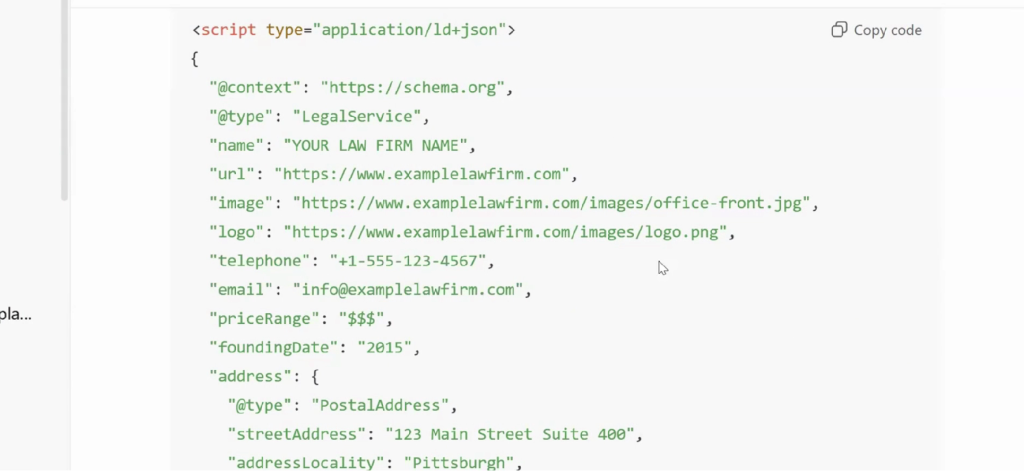
Make sure your website schema (the backend data search engines read) matches your GBP exactly. If you’re using structured data like LocalBusiness or Attorney schema, they need to be aligned.  In our last article, we discussed the best schema to implement as a law firm. 

This can get tricky — it’s something we specialize in at IFTS.

What Happens If You Ignore This?

  • Your visibility drops — both in traditional and AI search
  • You lose out on local clients actively searching for help
  • AI models may recommend your competitors instead, simply because their data is more verifiable

You miss out on the most valuable type of lead — high-intent local searchers

Want the Easy Version? We’ve Got You Covered!

We created a free Google Business Profile Optimization Checklist for Law Firms. It walks you through everything above — step-by-step — and includes bonus tips we use with our own clients.

Download the checklist here

And if you’d like us to take this off your plate — including posting, reviews, schema, and citation cleanup — we do it all under our Local SEO + AI Optimization Package designed just for law firms.

Book a free strategy call with IFTS and let’s get you showing up where it matters most.

Let IFTS help your law firm get found, trusted, and chosen — not ignored.

Why Schema Markup Is the Secret Weapon Your Law Firm Website Needs for AI Search

If your law firm’s website has great content but still isn’t showing up in AI-powered search results, the problem may be hidden in your code.

It’s not your keywords.

It’s not your backlinks.

It’s your schema markup — and if you’re missing it, you’re practically invisible to Google’s featured snippets and AI tools like ChatGPT, Gemini, Grok and Perplexity.

In this post, we’ll break down what schema is, why it’s critical for AI visibility, and how law firms can start using it — the right way.

What Is Schema Markup?

Schema markup (also known as structured data) is a type of code that tells search engines and AI tools what your content means, not just what it says.

Think of it like adding labels to a filing cabinet:

  • Instead of a long document labeled “About Us,” schema tells AI, “This section is a licensed attorney bio.”
  • Instead of a wall of text, schema says, “This block is a client review.”
  • Instead of just listing practice areas, schema identifies them as “services provided.”

This markup is invisible to visitors — but search engines and AI tools rely on it to decide whether your site is accurate, credible, and worth showing.  So, it sits behind the scenes as a little script that runs only for the bots crawling your site.

Why Schema Is Critical for Law Firm SEO and AEO

Search is changing fast. By 2027, AI-driven search tools are expected to replace traditional search engines for most legal queries.

But unlike Google, these tools don’t show 10 links.

They show one answer, maybe two – and if your site isn’t structured to feed that answer, it won’t get picked.

Schema markup gives your site the structure that AI assistants understand and prioritize.

Here’s what schema helps with:

  • Showing up in featured snippets, FAQs, and voice results
  • Getting indexed more accurately
  • Improving click-through rates by enhancing your search appearance
  • Making your law firm the “single answer” AI tools display

This is the future of AEO (Answer Engine Optimization). Schema is no longer a bonus — it’s a requirement.

5 Schema Types Every Law Firm Should Be Using

Not all schema is created equal. 

Here are the five types we recommend implementing immediately on law firm websites:

1. LocalBusiness Schema

This tells AI your business is real, local, and verified — critical for Local SEO and Google Maps.

Include:

  • Name, address, phone (NAP)
  • Hours of operation
  • URL and email
  • Price range
  • Bar association and license details


Use the code below as a guide:


<script type=”application/ld+json”>

{

  “@context”: “https://schema.org”,

  “@type”: “LegalService”,

  “name”: “Ivol Legal Group”,

  “image”: “https://www.ivollegal.com/images/logo.png”,

  “@id”: “https://www.ivollegal.com”,

  “url”: “https://www.ivollegal.com”,

  “telephone”: “(412) 555-1234”,

  “address”: {

    “@type”: “PostalAddress”,

    “streetAddress”: “123 Main St Suite 200”,

    “addressLocality”: “Pittsburgh”,

    “addressRegion”: “PA”,

    “postalCode”: “15222”,

    “addressCountry”: “US”

  },

  “priceRange”: “$$”,

  “openingHours”: “Mo-Fr 09:00-17:00”,

  “geo”: {

    “@type”: “GeoCoordinates”,

    “latitude”: 40.4406,

    “longitude”: -79.9959

  },

  “sameAs”: [

    “https://www.facebook.com/ivollegal”,

    “https://www.linkedin.com/company/ivol-legal-group”,

    “https://www.youtube.com/@ivollegal”,

    “https://www.justia.com/lawyers/pennsylvania/ivol-legal-group”

  ]

}

</script>

2. Attorney / Person Schema

This needs to be on each attorney bio page.

Add this to each attorney bio page to highlight:

  • Education and credentials
  • Bar numbers and certifications
  • Speaking engagements or articles published
  • Awards or honors

This boosts E-E-A-T (Experience, Expertise, Authority, Trustworthiness), which AI and Google love.


Use the code below as a guide:

<script type=”application/ld+json”>

{

  “@context”: “https://schema.org”,

  “@type”: “Person”,

  “name”: “Stacey A. Ivol, Esq.”,

  “image”: “https://www.ivollegal.com/images/stacey-ivol.jpg”,

  “jobTitle”: “Founder & Estate Planning Attorney”,

  “worksFor”: {

    “@type”: “LegalService”,

    “name”: “Ivol Legal Group”

  },

  “url”: “https://www.ivollegal.com/team/stacey-ivol”,

  “sameAs”: [

    “https://www.linkedin.com/in/staceyivol”,

    “https://www.avvo.com/attorneys/15222-pa-stacey-ivol-123456.html”

  ],

  “alumniOf”: {

    “@type”: “CollegeOrUniversity”,

    “name”: “University of Pittsburgh School of Law”

  },

  “memberOf”: “Pennsylvania Bar Association”,

  “knowsAbout”: [“Estate Planning”, “Wills”, “Trusts”, “Probate”],

  “description”: “Stacey A. Ivol is an experienced estate planning attorney based in Pittsburgh, PA with over 15 years of experience helping families protect their legacy.”

}

</script>

3. FAQPage Schema

FAQ schema allows your site’s questions and answers to be featured directly in search results or cited by AI tools.

We recommend creating FAQ sections for:

  • Each practice area
  • Legal procedures (e.g., “How long does probate take in Pennsylvania?”)
  • General law firm policies


Use the code below as a guide:

<script type=”application/ld+json”>

{

  “@context”: “https://schema.org”,

  “@type”: “FAQPage”,

  “mainEntity”: [

    {

      “@type”: “Question”,

      “name”: “Do I need a will in Pennsylvania?”,

      “acceptedAnswer”: {

        “@type”: “Answer”,

        “text”: “Yes, a will ensures your assets are distributed according to your wishes and can simplify probate for your family.”

      }

    },

    {

      “@type”: “Question”,

      “name”: “How long does probate take in Allegheny County?”,

      “acceptedAnswer”: {

        “@type”: “Answer”,

        “text”: “Probate typically takes 9–12 months in Allegheny County, but it can vary depending on the complexity of the estate.”

      }

    }

  ]

}

</script>

4. Service Schema

Each area of practice (AKA service) like estate planning, family law, bankruptcy, etc. should have its own page — and its own schema.

This improves targeting and helps you show up when people search “bankruptcy lawyer in Westmoreland County,” instead of just “lawyer.”


Use the code below as a guide:

<script type=”application/ld+json”>

{

  “@context”: “https://schema.org”,

  “@type”: “Service”,

  “serviceType”: “Estate Planning”,

  “provider”: {

    “@type”: “LegalService”,

    “name”: “Ivol Legal Group”,

    “url”: “https://www.ivollegal.com”

  },

  “areaServed”: {

    “@type”: “Place”,

    “name”: “Allegheny County, Pennsylvania”

  },

  “description”: “Comprehensive estate planning services including wills, trusts, powers of attorney, and healthcare directives for individuals and families in Pennsylvania.”,

  “url”: “https://www.ivollegal.com/services/estate-planning”,

  “availableChannel”: {

    “@type”: “ServiceChannel”,

    “serviceLocation”: {

      “@type”: “Place”,

      “address”: {

        “@type”: “PostalAddress”,

        “addressLocality”: “Pittsburgh”,

        “addressRegion”: “PA”

      }

    }

  }

}

</script>

5. Article Schema

Blogs and educational content should be marked up as articles, with:

  • Author info
  • Published and updated dates
  • Tags for practice areas or jurisdictions

Google rewards recency. Article schema helps prove your site is active and trustworthy.


Use the code below as a guide:

<script type=”application/ld+json”>

{

  “@context”: “https://schema.org”,

  “@type”: “Article”,

  “mainEntityOfPage”: {

    “@type”: “WebPage”,

    “@id”: “https://www.ivollegal.com/blog/schema-for-law-firms”

  },

  “headline”: “Why Schema Is the Secret to Law Firm SEO in 2025”,

  “image”: “https://www.ivollegal.com/images/blog/schema-law-firms-cover.jpg”,

  “author”: {

    “@type”: “Person”,

    “name”: “Stacey A. Ivol”

  },

  “publisher”: {

    “@type”: “Organization”,

    “name”: “Ivol Legal Group”,

    “logo”: {

      “@type”: “ImageObject”,

      “url”: “https://www.ivollegal.com/images/logo.png”

    }

  },

  “datePublished”: “2025-12-15”,

  “dateModified”: “2025-12-15”

}

</script>


How to Add Schema to Your Law Firm Website (Safely)

Here are a few ways to get started — but be careful: it’s easy to implement schema incorrectly and accidentally break your site or hurt your rankings.

Method 1: WordPress Plugins

If your site runs on WordPress, tools like RankMath offer built-in schema functionality.

They let you:

  • Set default schema types per page/post
  • Customize person, service, and local business schema
  • Add FAQ blocks easily

Tip: RankMath tends to offer more granular schema control than most other plugins

Method 2: Online Schema Generators

If you’re using Squarespace, Weebly, Wix, or a custom HTML site, you can use free tools like:

These tools let you paste in your firm details and generate copy-paste JSON-LD code.

BUT: You still need to insert it into your site properly and test it using Google’s Rich Results Test or Schema.org’s validator.

Method 3: AI-Generated Schema (Advanced)

Tools like ChatGPT can generate schema markup if you prompt them correctly, but be cautious — AI sometimes produces invalid or incomplete code.

Always:

  • Validate the code in Schema.org’s validator
  • Use a staging site to test before going live
  • Avoid overlapping or conflicting schema types

What Happens If You Get Schema Wrong?

Bad schema can:

  • Cause rich results to disappear from Google
  • Break your site’s code or display
  • Confuse AI tools and damage trust signals

That’s why, even though tools exist, we don’t recommend law firms DIY this unless they’re very tech-savvy.

Want Schema That Works — Without the Risk?

At IFTS, we implement search-optimized schema as part of our AI Content + AEO Packages for law firms. Each package includes:

  • LocalBusiness, Attorney, and Service schema setup
  • FAQ content with proper markup
  • Article schema for blog content
  • Directory cleanup (Avvo, Justia, bar associations)
  • Schema validation and ongoing monitoring

You’ll be visible not just on Google, but on AI tools like ChatGPT, Perplexity, and Gemini — the new gatekeepers of search.

Book a free strategy call and we’ll review your current site for visibility gaps — including schema, content, and AI-readiness.

Or watch our full video breakdown here:

Watch: The Schema Secret Law Firms Are Missing 

Schema markup may be invisible — but it’s the most visible thing to AI search engines.

The law firms who adopt it now will dominate in tomorrow’s search results.

The ones who ignore it?

They may never be found again…